
Yes, it’s real
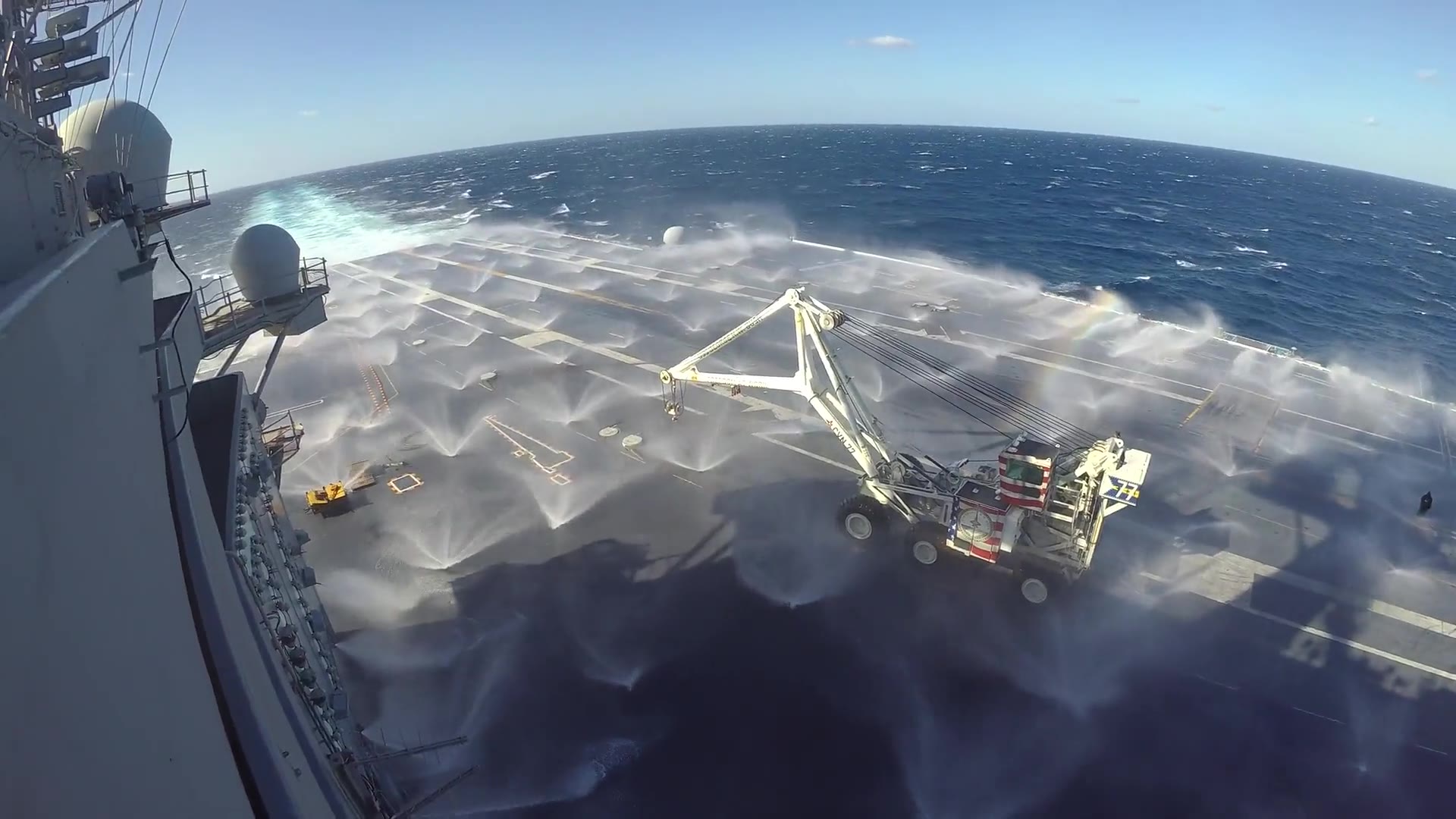
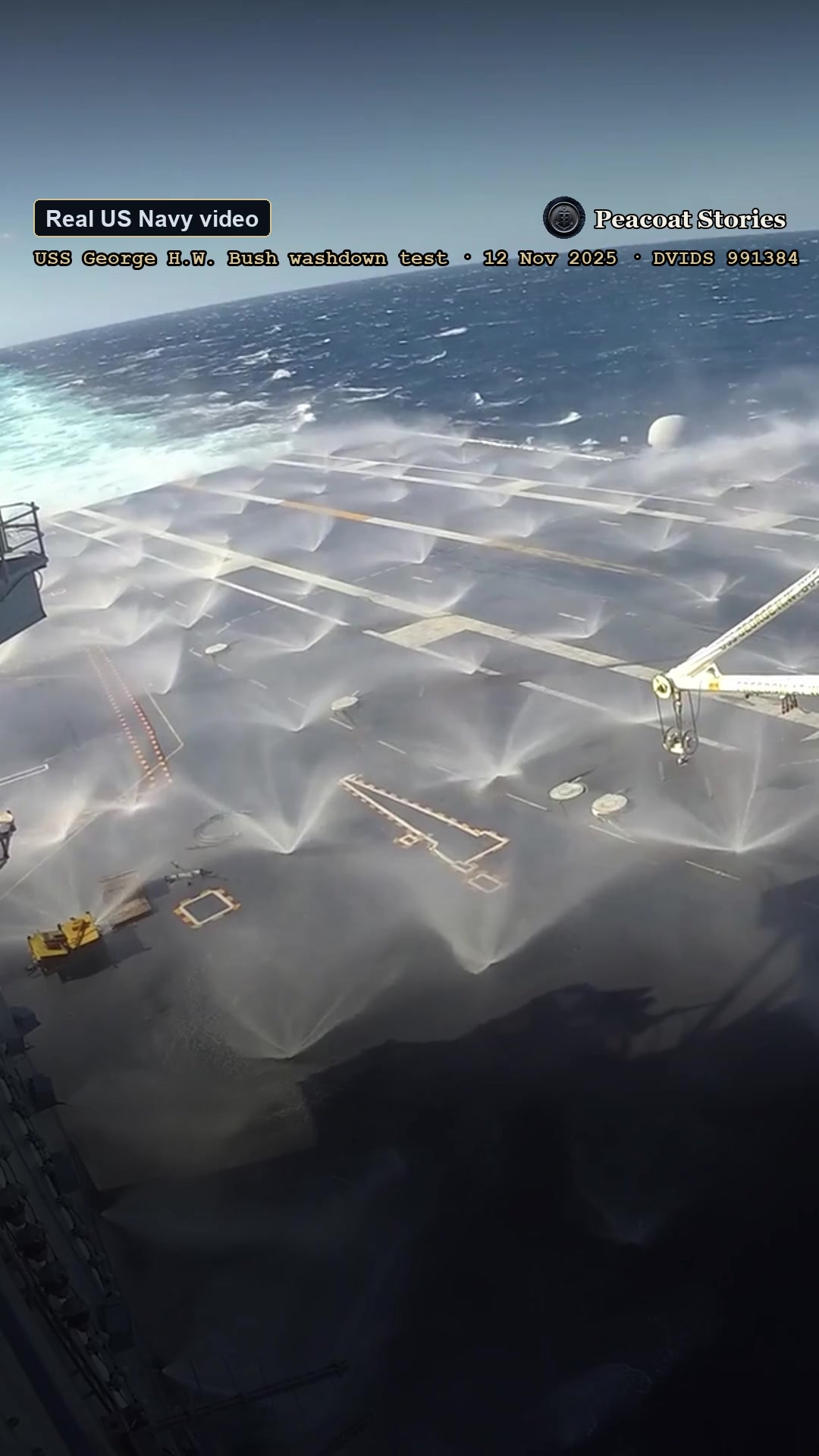
The footage looks unreal: an entire aircraft carrier flight deck firing fountains of seawater, rainbows in the spray, sailors in chemical suits walking through the mist. Plenty of people online assume it’s computer-generated.
It isn’t. This is the USS George H.W. Bush, filmed by the Navy on November 12, 2025, testing her countermeasure washdown system.
What it does
The Navy’s Damage Controlman training manual describes it plainly: “The washdown system consists of piping and a series of nozzles. They throw a large spray pattern on weather decks and other surfaces.” The water comes from the ship’s fire main, which pumps seawater straight from the sea.
The Navy calls it countermeasure washdown, or CMWD for short. On aircraft carriers the system can also spray firefighting foam, aqueous film forming foam (AFFF). In a 2015 test aboard USS George Washington, crews covered the hangar bays and the outside of the ship in a mix of 6 percent foam and 94 percent water, then rinsed the decks with seawater.
The key is timing. In the manual’s words, “If the washdown system is turned on before contamination, it prevents heavy contamination of the ship by coating the weather surfaces with a flowing stream of water.” Radioactive fallout, or chemical and biological agents, land on a moving sheet of water instead of bare steel, and the water carries them over the side.
The manual says the system works much better as a preventive measure than as a way to clean a ship afterward. That lesson cost the Navy a fleet.
The lesson from Bikini
In the summer of 1946 the United States tested atomic bombs against a fleet of real warships at Bikini Atoll in the Pacific, a test series called Operation Crossroads. The second test, BAKER, on July 25, 1946, was set off underwater.
According to the Naval History and Heritage Command, BAKER “caused most of the target fleet to be bathed in radioactive water spray and radioactive debris from the lagoon bottom.” Work crews tried to wash the ships’ exteriors, but “the safe time aboard the target ships was measured only in minutes.” By August 10 the Navy stopped work at Bikini. Most of the remaining target ships were later sunk, between 1946 and 1948.
The ships couldn’t be scrubbed clean. The answer was to keep the contamination from sticking in the first place.
“In less than 30 seconds”
A US patent filed in 1954, “Ship decontamination system,” lays out the idea. It was built on data “obtained from the target ship at Bikini.”
The design called for the system to “completely wet down the vessel in less than 30 seconds.” It used “rotating water fog-nozzles” fed from the fire main and was switched on by “a single push-button control,” for example on the bridge. The patent also notes it could reduce the effects of chemical and biological contamination, not just radiation.
Still tested today
Ships still test these systems. Besides the George H.W. Bush video, the Coast Guard cutter Kimball tested hers during 2019 sea trials, a system “designed to help protect the ship against nuclear, chemical, and biological weapons.”
So the next time someone says a ship showering itself is fake, now you know where it started.