
The fastest ship on the Atlantic
The French liner Normandie was a showpiece. On her first Atlantic crossing she arrived in New York on June 3, 1935, and won the Blue Riband for the fastest crossing.
When war came to Europe, she sought safety in New York harbor. The U.S. government interned her on September 3, 1939, two days after Germany invaded Poland, and she sat at Pier 88 on the Hudson River.
A troopship in a hurry
Five days after Pearl Harbor, the Coast Guard took possession of the ship. On December 24, 1941, she was turned over to the Navy, and on December 31 the Secretary of the Navy approved a new name, La Fayette, soon written Lafayette. She became USS Lafayette (AP-53), a transport.
The plan was to turn her into a troopship fast, right at the pier rather than in a shipyard. Her prospective commanding officer, Capt. Robert G. Coman, warned that a crew needed weeks, even months, to learn a ship that big and complicated. The sailing date stayed set for February 14, 1942.
February 9, 1942
At about 2:30 that afternoon, sparks from a worker’s torch set fire to a bale of kapok life preservers stored in the ship’s main salon. Workers beat at the flames with coats and pieces of carpet. The New York City fire department arrived about 15 minutes after the fire was first discovered.
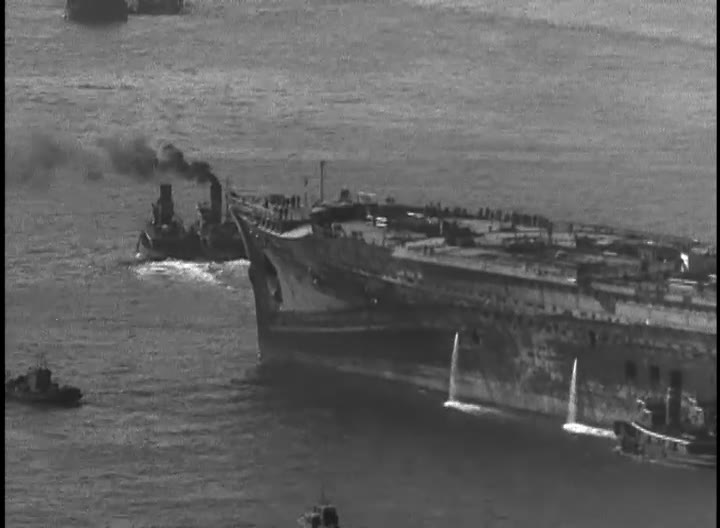
A strong northwest wind drove the fire forward. Within an hour it had spread across the three upper decks. Fireboats and firefighters poured water into her, about 6,000 tons of it, with city officials worried the fire could spread to buildings ashore.
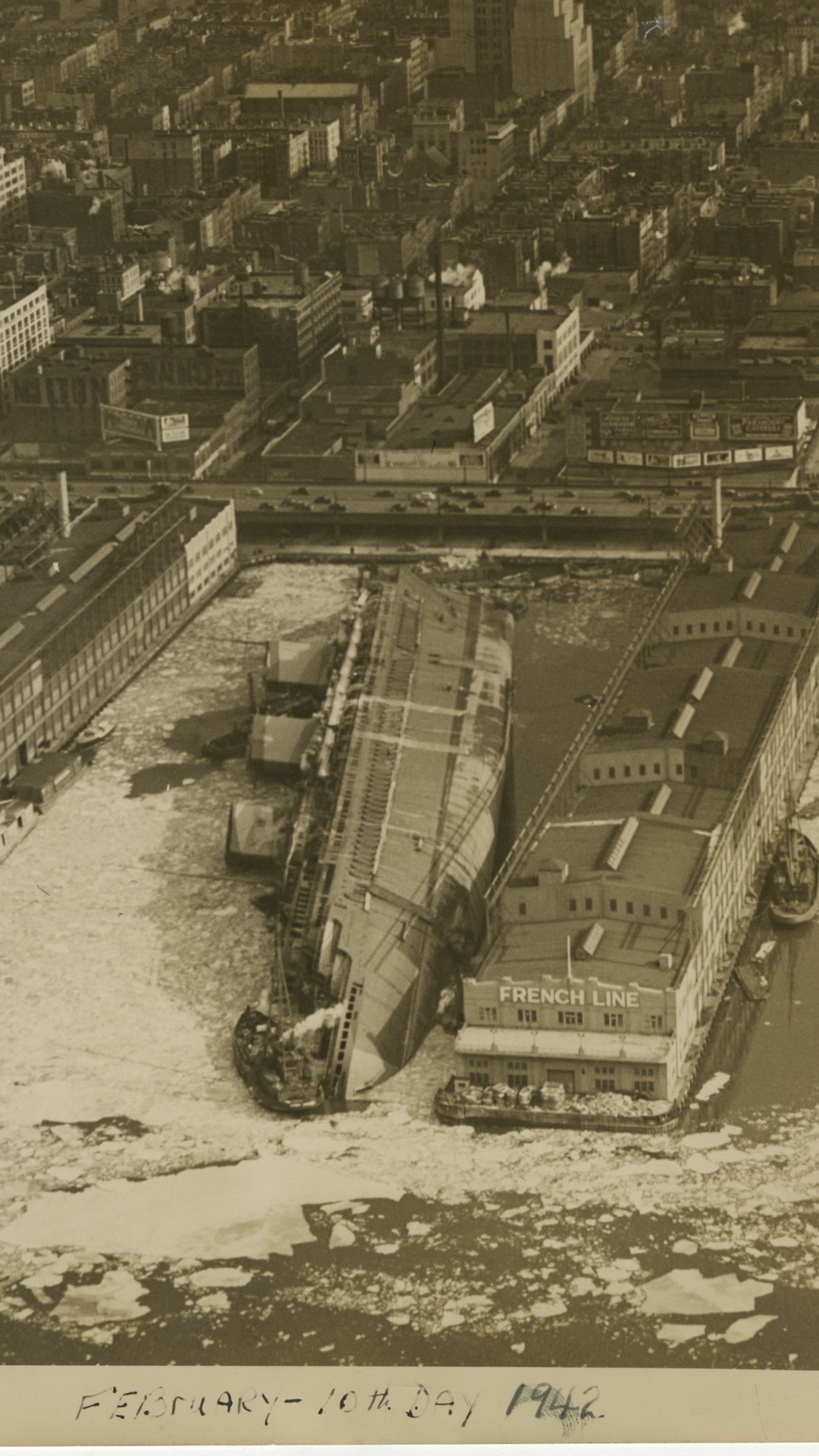
By evening the fire was under control. But the water kept running into the ship’s lower decks, and Lafayette leaned further and further to port. Shortly after midnight the ship was ordered abandoned. At 2:45 a.m. on February 10, she capsized, coming to rest on her port side at an angle of about 80 degrees.
Remarkably, only one man died. About 285 others were treated for injuries, burns, smoke and exposure: 94 Navy and Coast Guard sailors, 38 firefighters and 153 civilians.
What went wrong
A Navy investigation blamed carelessness by the contractor’s workers. A congressional committee also found “undue haste, indecision, and lack of careful planning” in the conversion, and divided authority on board. On February 26, 1942, President Roosevelt gave the Navy full responsibility for protecting the waterfront and ships in American harbors.
Was it sabotage?
Many people at the time believed enemy agents had set the fire. The Senate Committee on Naval Affairs looked into it, and so did a House subcommittee, a naval court of inquiry, the FBI, the city fire department’s fire investigators and the New York County district attorney.
In May 1942 the Senate committee reported that it found “no evidence to support the widely held theory” that enemy agents started the fire, and that all the investigators agreed “sabotage played no part in it.” It put the capsizing down to “the undue amount of water placed on board the ship by the New York City Fire Department in the act of extinguishing the fire.”
Standing her back up
The Navy decided to raise her. Salvage crews stripped away her superstructure, sealed her up and pumped her out, in what the Naval History and Heritage Command calls “one of the largest operations of its kind in history.” On August 7, 1943, Lafayette was upright again, and that fall she was towed away to dry dock.
She never sailed again. Her hull was badly damaged, her machinery had deteriorated, and the workers were needed on more urgent war jobs. She was stricken from the Navy list in October 1945, sold for scrap in October 1946, and broken up at Port Newark, New Jersey.
What she left behind
The salvage job wasn’t wasted. In the Navy’s words, it “produced scores of highly skilled salvage officers and divers who later played an important part in the salvage and emergency repair of vessels damaged during World War II.”